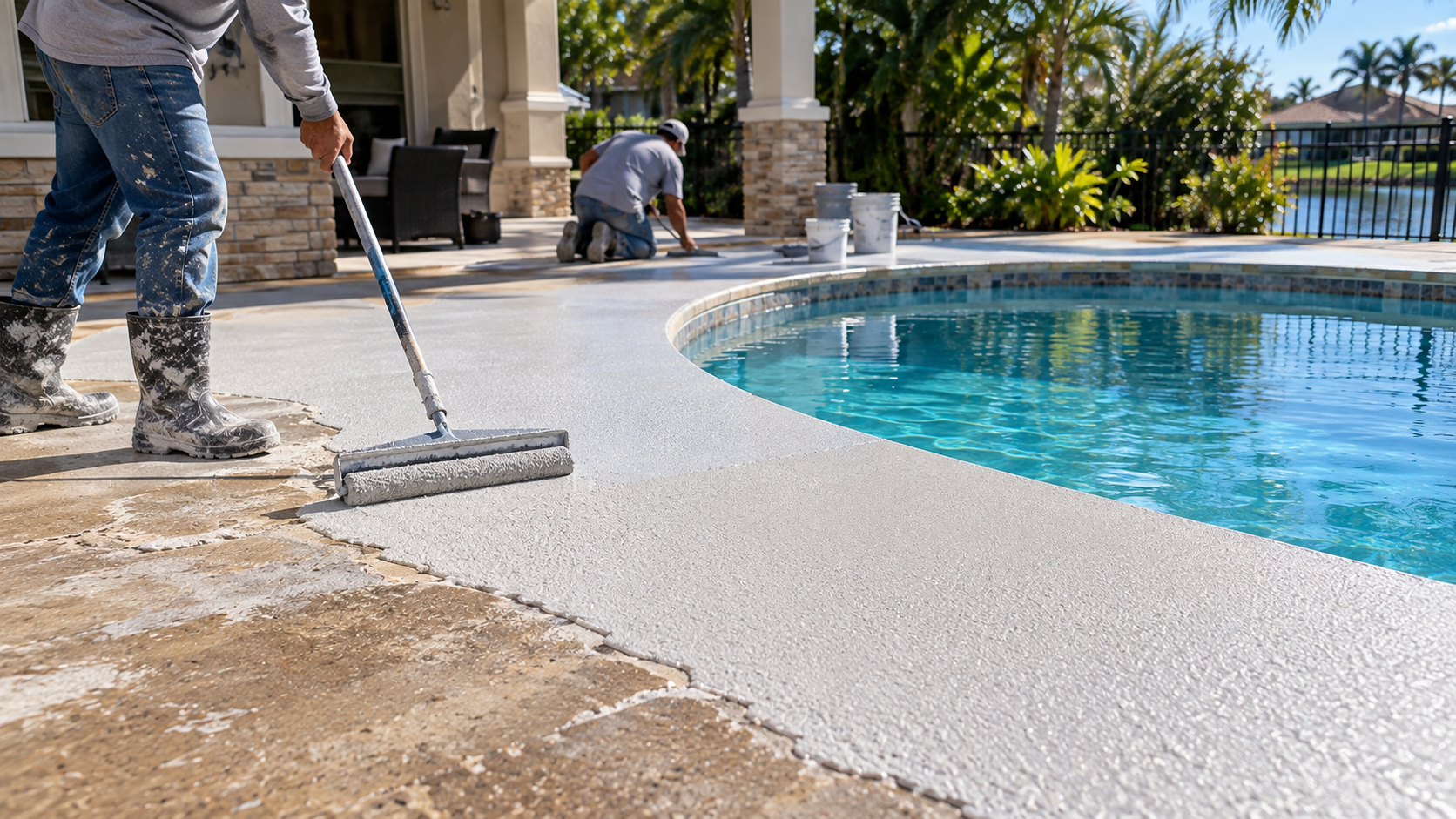
The pool deck takes more abuse than almost any other surface on a residential property. It sits in direct sun for hours every day, bears foot traffic from wet feet, absorbs pool chemicals that splash out, and expands and contracts through Georgia's seasonal temperature swings year after year. For Atlanta-area homeowners, the combination of Georgia's clay soils and hot, humid summers creates specific conditions that accelerate deck wear and settling. All In One Pool Construction handles pool deck installation, resurfacing, and leveling for homeowners across Atlanta, Marietta, Alpharetta, Roswell, Sandy Springs, Johns Creek, and the broader metro area, and this guide covers what you need to know before your deck becomes a safety issue or a renovation project.
Why Atlanta-Area Pool Decks Deteriorate Faster Than Homeowners Expect
Georgia's red clay soil is beautiful in the landscape and notoriously difficult under a concrete slab. Understanding how the two interact helps explain why pool decks in the Atlanta metro age the way they do.
Expansive clay soils. Georgia's clay-heavy soil expands significantly when it absorbs moisture and contracts when it dries out. That seasonal movement is not subtle. A clay soil with high plasticity can change volume by 10 to 15 percent between its wet and dry states. The slab sitting on top of it moves with it. Where the movement is uniform, the slab may hold up reasonably well. Where it is uneven, which is the more common scenario around a pool where irrigation, drainage, and splash-out create inconsistent moisture patterns in the surrounding soil, the slab develops stress fractures and begins to settle unevenly.
Tree root intrusion. Mature trees are common on Atlanta-area properties, and roots migrate toward the moisture that pools, irrigation systems, and landscaped beds provide. A root that grows under a pool deck section lifts it over time, creating a raised edge that is both a tripping hazard and a sign of more significant soil disruption beneath. Removing the surface problem without addressing the root situation leads to the same issue recurring.
UV degradation and chemical exposure. Georgia's long, intense summers accelerate the breakdown of concrete sealer and surface coatings. Pool chemicals that splash out, including chlorine and acid from periodic cleaning, attack unsealed concrete surfaces and contribute to pitting, staining, and surface breakdown. A deck that was sealed at installation and has not been resealed in several years is absorbing more chemical exposure than it should.
Freeze-thaw cycles. The Atlanta area does freeze, and concrete that has absorbed moisture can crack when that moisture expands during a hard freeze. Georgia winters are mild enough that this is not the primary driver of deck deterioration the way it is in northern climates, but occasional hard freezes contribute to crack propagation in surfaces that are already stressed.
Signs Your Atlanta Pool Deck Needs Attention
Cracks
Surface cracks in a concrete pool deck fall into a few categories, and the type matters for repair planning.
Hairline cracks are very fine cracks in the surface layer only. They are typically cosmetic rather than structural and develop from normal curing and weathering. Left unsealed, they allow water to penetrate the surface and accelerate deterioration from below.
Settlement cracks are wider and often run diagonally or follow the control joints in the slab. They indicate that the slab sections on either side of the crack have moved relative to each other, which is a soil movement issue rather than a surface one. Patching a settlement crack without addressing the underlying soil condition produces a patch that reopens.
Structural cracks penetrate through the full depth of the slab and indicate significant movement or failure of the substrate beneath. These require a more comprehensive repair or section replacement rather than a surface patch.
Uneven or Settled Sections
A pool deck that has sections at different heights is a serious safety concern. Wet feet on an uneven surface create a slip and fall risk, and the raised edges that often accompany settling are a tripping hazard for anyone walking around the pool. Beyond the safety issue, uneven sections also direct water toward the pool edge or the house rather than away from it, which can affect drainage and eventually the foundation.
Surface Pitting, Scaling, or Spalling
Pitting is the development of small voids or holes in the concrete surface. Scaling and spalling are forms of surface delamination where the top layer of concrete flakes or peels away. Both indicate that the surface layer has been compromised by chemical exposure, freeze-thaw cycles, or poor original finishing. A deck that is pitting or scaling is going to continue deteriorating and becomes progressively harder to clean and maintain.
Staining That Will Not Come Out
Pool deck staining from algae, mineral deposits, rust from furniture, and tannins from tree leaves is normal maintenance. Staining that persists through cleaning typically indicates that the sealer has failed and the concrete is absorbing stains rather than repelling them. At that point, resurfacing is more effective than continued cleaning attempts.
Fading and Dullness
A concrete or paver deck that has faded significantly from its original color has lost its surface protection. The sealer and any surface treatment that gave the deck its appearance have degraded. This is often the right time to resurface before the underlying surface sustains more serious damage.
Pool Deck Repair and Resurfacing Options
The right approach depends on the condition of the existing deck and what you want the finished result to look like.
Crack Repair and Patching
For decks that are otherwise in good condition with isolated crack damage, targeted crack repair followed by sealing is the most cost-effective approach. The repair method depends on the crack type: hairline cracks are filled with a penetrating epoxy or polyurethane sealant; wider settlement cracks require routing out, filling with a flexible sealant or epoxy patching compound, and then monitoring to confirm the movement has stabilized before sealing.
Patching a crack on a settled slab without leveling the slab first is a short-term fix. The crack will reopen as the underlying movement continues.
Mudjacking and Foam Lifting
For decks with sunken or settled sections where the concrete itself is still structurally sound, slab lifting is an option before resurfacing. Traditional mudjacking pumps a cement slurry beneath the settled slab to raise it back to grade. Polyurethane foam injection is a newer alternative that uses an expanding foam to lift the slab with smaller injection holes and less disruption to the surrounding surface.
Neither method works when the slab itself is significantly cracked or deteriorated. In that case, removal and replacement of the affected section is the better path.
Concrete Resurfacing
Concrete resurfacing applies a new surface layer over the existing slab, refreshing the appearance and creating a new protective layer without the cost and disruption of full slab removal. The existing surface needs to be clean, sound, and properly prepared for the overlay to bond correctly. Resurfacing is not appropriate for a deck with significant structural cracking or settled sections that have not been leveled.
Resurfacing options for Atlanta-area pool decks include:
Brushed concrete overlay creates a slip-resistant surface that matches the appearance of a new concrete deck. It is the most straightforward and cost-effective resurfacing option.
Stamped concrete overlay applies a textured pattern that mimics stone, brick, or pavers. It is a popular choice for homeowners who want a more decorative look without the cost of removing and replacing with an actual paver surface.
Cool deck and kool deck coatings are acrylic-based coatings that reduce the surface temperature of the deck in direct sun, which is a meaningful comfort factor for bare feet in Georgia's summers. These coatings also add slip resistance and can be applied in a range of colors.
Exposed aggregate is a surface finish that reveals the aggregate in the concrete mix by removing the top layer of cement paste. It is highly slip-resistant and durable, and the natural variation in aggregate color produces a finished look that holds up well aesthetically as it ages.
Paver Installation
For homeowners doing a full deck renovation or building a new pool, concrete pavers or travertine are popular alternatives to poured concrete. Pavers have natural expansion joints built in, which eliminates the cracking risk associated with a poured concrete slab that lacks adequate control joints. Individual pavers can be removed and replaced if a section settles or is damaged, making long-term maintenance more manageable than repairing a poured slab.
Travertine is particularly popular in the Atlanta market for its natural appearance and the fact that it stays noticeably cooler underfoot than concrete in direct sun. All In One Pool Construction installs concrete, paver, and travertine decks as part of new pool construction and renovation projects throughout the metro area.
Leveling: When It Has to Come Before Resurfacing
A pool deck that has settled significantly cannot simply be resurfaced. Applying a new surface layer over an uneven slab produces an uneven result and does not address the underlying soil condition that caused the settlement.
The correct sequence for a settled deck is: assess the cause of settlement, address the substrate condition if it can be corrected, level the slab through lifting or section replacement, and then resurface. Skipping the leveling step wastes the resurfacing investment because the same forces that caused the original settlement will continue acting on the new surface.
All In One Pool Construction assesses the full condition of the deck before recommending a repair or resurfacing approach. A deck that looks like it needs resurfacing may actually need section replacement first, and identifying that upfront saves the homeowner from a resurfacing job that fails prematurely.
What to Expect from the Process
Assessment. The first step is evaluating the existing deck's condition: crack type and extent, settlement patterns, surface integrity, drainage, and the condition of the surrounding coping and pool edge. This determines the right repair sequence and resurfacing option.
Preparation. Proper surface preparation is the most critical factor in resurfacing quality. The existing surface must be cleaned, etched or ground to create mechanical adhesion, and any structural issues addressed before the overlay is applied. Resurfacing over a poorly prepared surface produces delamination and early failure.
Repair and leveling. Cracks are addressed, settled sections are lifted or replaced, and the surface is brought to a consistent grade before any overlay is applied.
Resurfacing and finishing. The chosen overlay or coating is applied, finished to the selected texture, and sealed. Cure time varies by material and weather conditions.
Timeline. A straightforward resurfacing project on an existing deck can often be completed in a few days of active work. Projects that involve section replacement or leveling take longer. All In One Pool Construction provides a clear timeline before any work begins.
FAQ
How long does a resurfaced pool deck last in the Atlanta area?
With proper preparation and a quality sealer, a concrete resurfacing project typically lasts eight to fifteen years before it needs to be redone. Paver and travertine installations last significantly longer with periodic joint sand replenishment and sealing. The primary factor affecting longevity in the Atlanta area is how well the surface is maintained and whether it is resealed on the recommended schedule.
Can you resurface a pool deck that has settled sections?
Resurfacing over a settled slab without leveling it first produces an uneven result and does not address the cause of the settlement. Settled sections need to be lifted or replaced before resurfacing. All In One Pool Construction assesses the full deck condition before recommending a repair sequence so you are not paying for a resurfacing job that will fail prematurely.
How do I know if my Atlanta pool deck needs resurfacing or full replacement?
If the slab is structurally sound with surface-level damage such as pitting, staining, fading, and hairline cracks, resurfacing is typically the right call. If the slab has significant structural cracking, multiple settled sections, or has deteriorated past the point where a new surface layer can bond reliably, section replacement or full replacement is the more appropriate scope. An on-site assessment tells you which situation you are in.
Do you handle both the leveling and the resurfacing, or do I need separate contractors?
All In One Pool Construction handles the full scope in-house, including leveling, crack repair, and resurfacing. There are no subcontractor handoffs. The same crew that assesses the deck condition completes the repair and the finished surface.
What is the difference between cool deck and regular concrete resurfacing?
A cool deck or kool deck coating is an acrylic-based product applied over existing concrete that reflects more heat than standard concrete and reduces the surface temperature underfoot in direct sun. Regular concrete resurfacing restores the surface without the thermal benefit. For Atlanta homeowners with south or west-facing pool decks that get full afternoon sun, the temperature difference is noticeable and is often worth the choice.
Ready to Restore Your Pool Deck? All In One Pool Construction Can Help.
All In One Pool Construction handles pool deck installation, resurfacing, leveling, and repair for homeowners throughout Atlanta, Marietta, Alpharetta, Roswell, Sandy Springs, Johns Creek, and across Georgia. Our crew handles every phase in-house with 20 years of experience and no subcontractor handoffs. Call (678) 889-2193 or request a free estimate online to discuss your project.
Other Blogs
Discover our extensive range of articles on pool construction and related topics
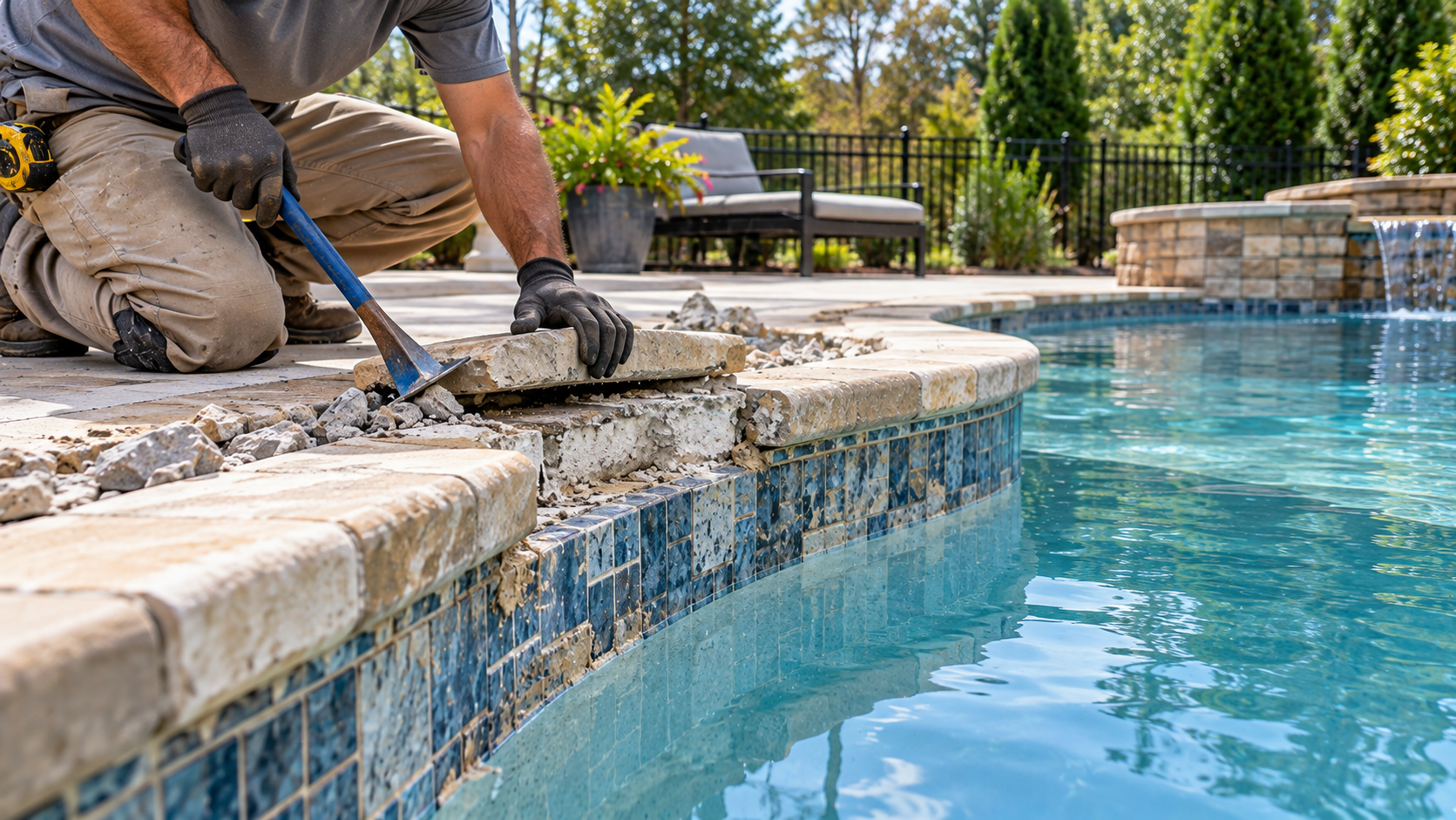
Waterline Tile and Coping Replacement in Metro Atlanta

Pool Deck Resurfacing and Leveling: What Atlanta-Area Homeowners Need to Know
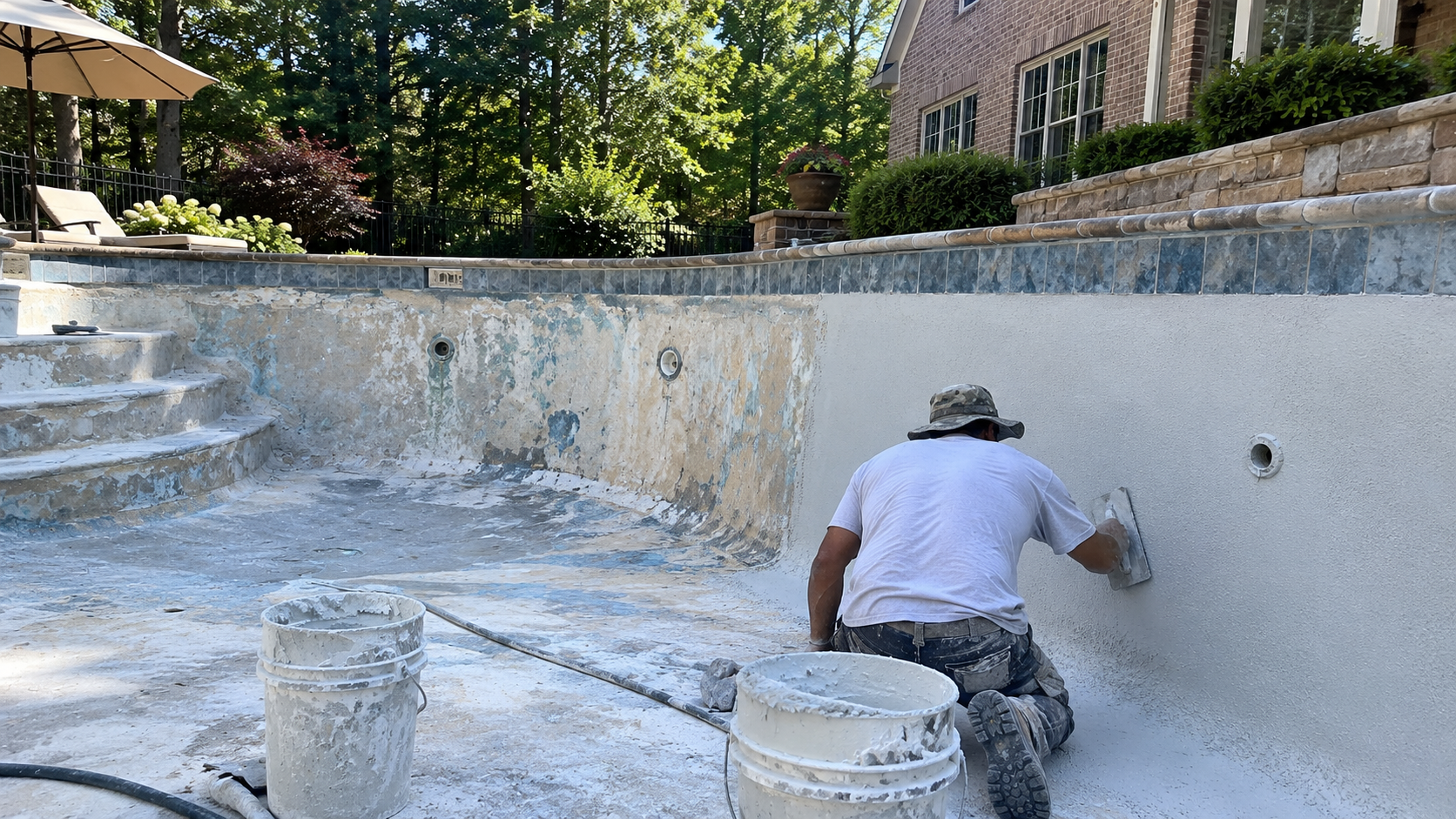
Pool Resurfacing & Replastering in Alpharetta, GA: Signs, Options, and What to Expect
Tell us about
your project.
We'd love to hear from you! Reach out with any questions or to discuss your project needs.