.webp)

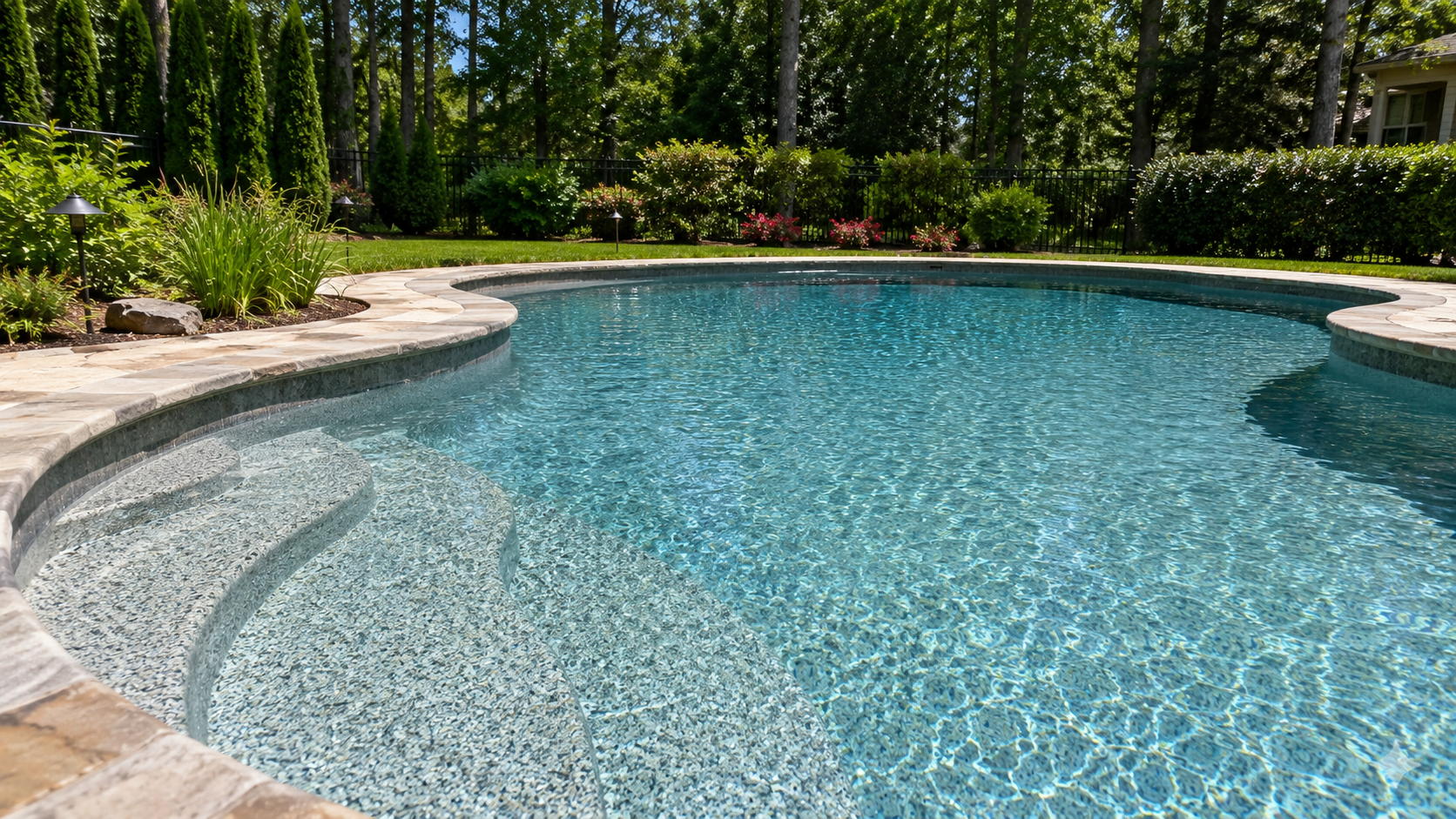
Picking a pool finish feels bigger than it should, mostly because you're staring at three options that all claim to be the best one. At All In One Pool Construction, we walk Suwanee homeowners through this pool finish comparison every week, whether they're building new or resurfacing a pool that's aged out of its last coat. Plaster, pebble, and quartz each do the job differently, and the right one depends on your budget, how long you want it to last, and honestly how much maintenance you're willing to do.
Plaster: The Budget-Friendly Classic
Plaster has been the standard pool finish for decades, and there's a reason it's still around. It's the most affordable option upfront, and it gives that clean, bright white look most people picture when they think "pool."
What plaster offers:
- Lowest upfront cost of the three finishes
- Smooth, classic appearance
- Wide availability of installers and repair techs
- Simple, well-understood repair process if it chips or stains
However, plaster is also the least durable option. It typically lasts 7 to 10 years before needing a resurface, and it's more prone to staining and etching from water chemistry swings. As a result, plaster pools need more consistent chemical maintenance to avoid rough patches and discoloration.
Who Plaster Makes Sense For
If you're working with a tighter budget or you know you'll resurface again within a decade anyway, plaster is a reasonable choice. It's also common for homeowners planning to sell within a few years who don't want to over invest in a finish they won't enjoy long term.
Pebble: Built for Durability
Pebble finishes use natural pebble aggregate exposed at the surface, which creates a textured look and a finish that holds up far longer than plaster.
Why pebble tends to win on longevity:
- Lifespan of 15 to 20 years with proper care, sometimes longer
- Highly resistant to staining and chemical damage
- Textured surface hides small imperfections better than smooth finishes
- Available in a wide range of natural color blends
The tradeoff is texture. Pebble finishes feel rougher underfoot than plaster or quartz, which some homeowners love for the natural look and others find less comfortable for bare feet and knees. We always recommend clients feel a pebble sample in person before committing, since photos don't capture the texture well.
Pebble Cost Considerations
Pebble sits in the mid to upper price range, more than plaster but generally less than premium quartz blends. Given its lifespan, though, the cost per year of ownership often comes out lower than plaster once you factor in how much sooner plaster needs replacing.
Quartz: The Middle Ground With Extra Polish
Quartz finishes blend crushed quartz aggregate into the plaster mix, landing somewhere between plaster and pebble in both look and performance.
What sets quartz apart:
- Smoother texture than pebble, closer to traditional plaster underfoot
- More color and finish options than plain plaster
- Lifespan typically in the 12 to 15 year range
- Better stain and crack resistance than standard plaster
Quartz gives homeowners a lot of the durability upgrade over plaster without going as textured as pebble. It's become a popular middle choice for Suwanee families who want something that looks a step above standard white plaster but don't need the maximum lifespan pebble offers.
Comparing Maintenance Across All Three
Maintenance differences matter just as much as upfront cost, since they affect what you'll be doing (and spending) for years after installation.
- Plaster needs the most frequent chemical monitoring and is quickest to show etching or staining
- Quartz holds color and resists staining noticeably better, cutting down on acid washing frequency
- Pebble requires the least frequent intervention thanks to its density and stain resistance, though its texture can trap debris that needs brushing
We've resurfaced plenty of Suwanee pools where the previous owner chose plaster purely on price and ended up resurfacing again sooner than planned because the water here, combined with Georgia's humidity and pollen season, stains lighter finishes faster than people expect.
Cost Breakdown at a Glance
While exact pricing depends on pool size and shape, the general order from least to most expensive typically runs plaster, then quartz, then pebble. That said, premium pebble blends with unique color mixes can push costs higher, and basic quartz can sometimes land close to standard plaster pricing depending on the product line.
The real number to look at isn't just the installation cost. Divide the price by expected lifespan, and pebble often becomes the more economical choice over a 15 to 20 year window, even though it costs more today.
What We Recommend Based on Priorities
If budget is the deciding factor and you're comfortable resurfacing again within a decade, plaster remains a solid, proven option. If you want a noticeable step up in durability without a big texture change, quartz hits that balance well. And if you're building for the long haul and don't mind a textured surface, pebble tends to deliver the best value over time.
FAQ
Which pool finish lasts the longest?
Pebble finishes generally last the longest, often 15 to 20 years with proper maintenance, compared to 7 to 10 years for plaster and 12 to 15 years for quartz.
Is quartz more expensive than plaster?
Quartz typically costs somewhat more than standard plaster upfront, though the gap varies by product line and color blend. Given its improved durability, many homeowners find the extra cost worthwhile.
Does pebble finish feel rough to walk on?
Yes, pebble has a noticeably textured surface compared to plaster or quartz. Most homeowners adjust to it quickly, but we recommend feeling a physical sample before deciding if you're sensitive to texture.
How often does a plaster pool need to be resurfaced?
Most plaster finishes need resurfacing every 7 to 10 years, though water chemistry maintenance habits and Georgia's climate can shift that timeline in either direction.
Can I switch finish types when resurfacing an existing pool?
In most cases, yes. Switching from plaster to quartz or pebble during a resurface is common and doesn't usually require structural changes to the pool shell.
Which finish resists staining best?
Pebble and quartz both outperform plain plaster on stain resistance, with pebble generally holding up slightly better over the long run due to its density.
Ready to Choose the Right Finish for Your Pool?
Whether you're leaning toward classic plaster, durable pebble, or the balanced middle ground of quartz, All In One Pool Construction can walk you through samples and pricing specific to your project. Book a consultation today and let's find the right finish for your Suwanee pool.
Other Blogs
Discover our extensive range of articles on pool construction and related topics
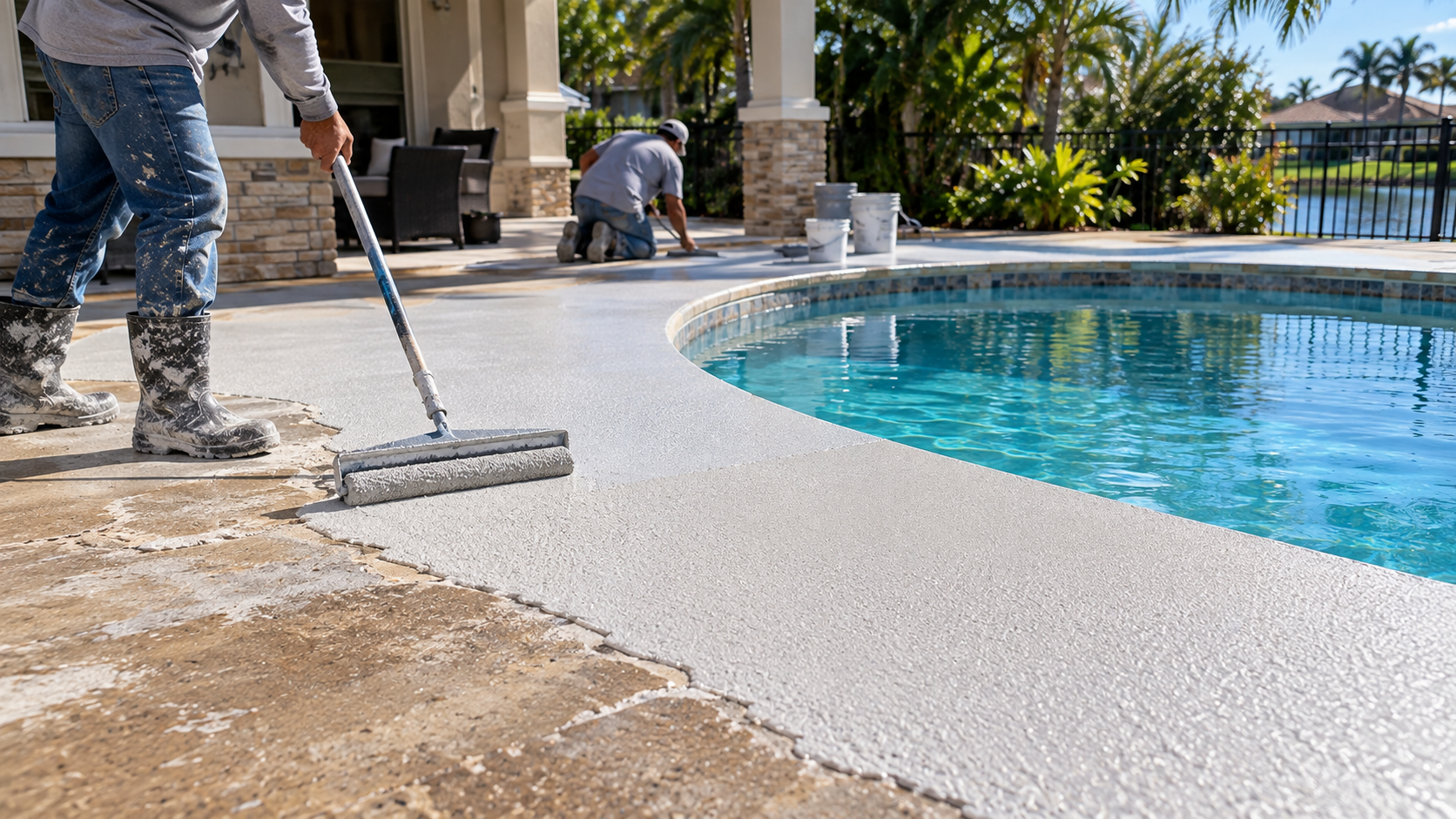
Pool Deck Resurfacing and Leveling: What Atlanta-Area Homeowners Need to Know

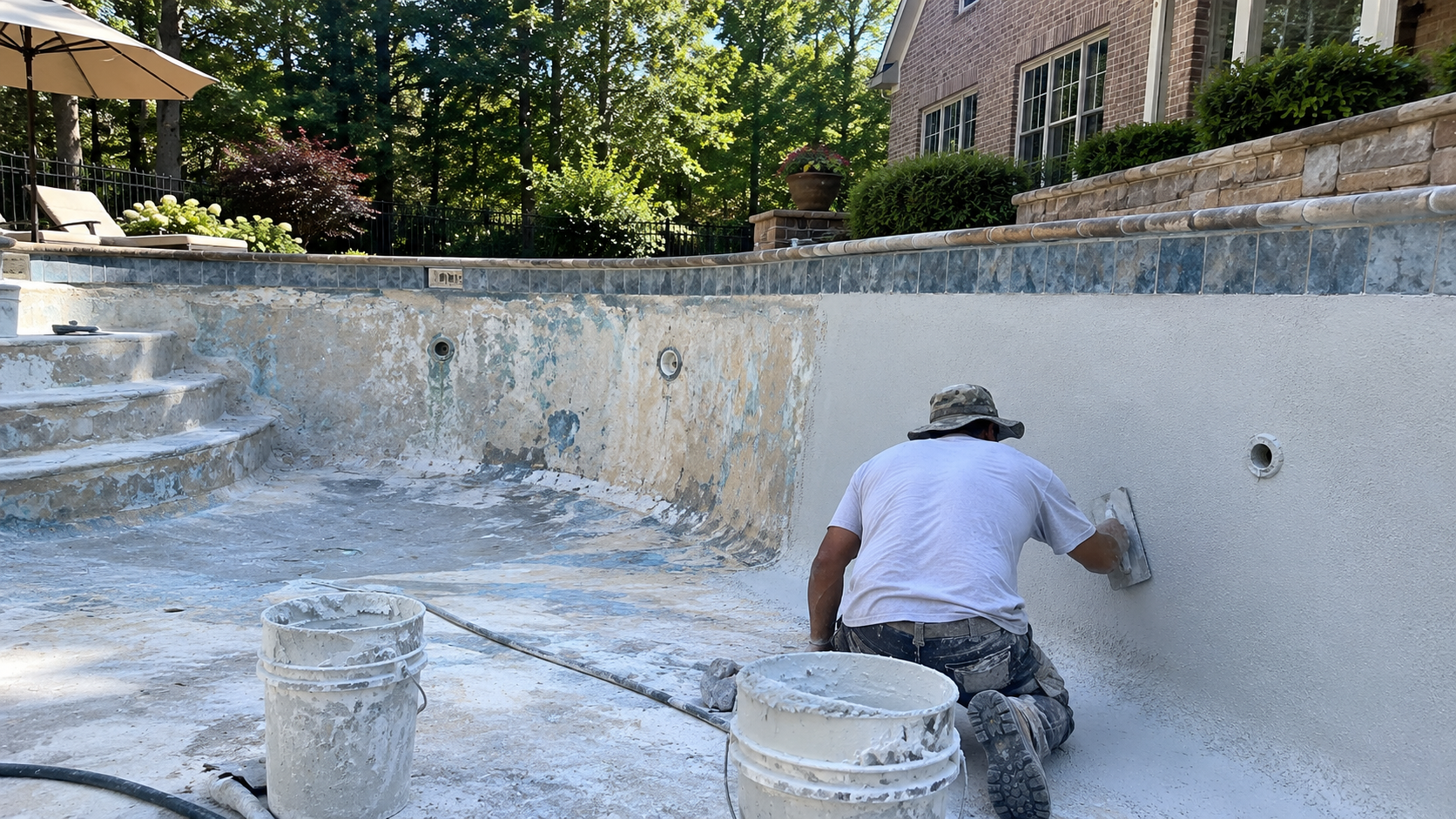
Pool Resurfacing & Replastering in Alpharetta, GA: Signs, Options, and What to Expect
Pool Renovation in Marietta, GA: What Homeowners Should Know Before They Start
Tell us about
your project.
We'd love to hear from you! Reach out with any questions or to discuss your project needs.