.webp)
Pool Resurfacing & Replastering in Alpharetta, GA: Signs, Options, and What to Expect

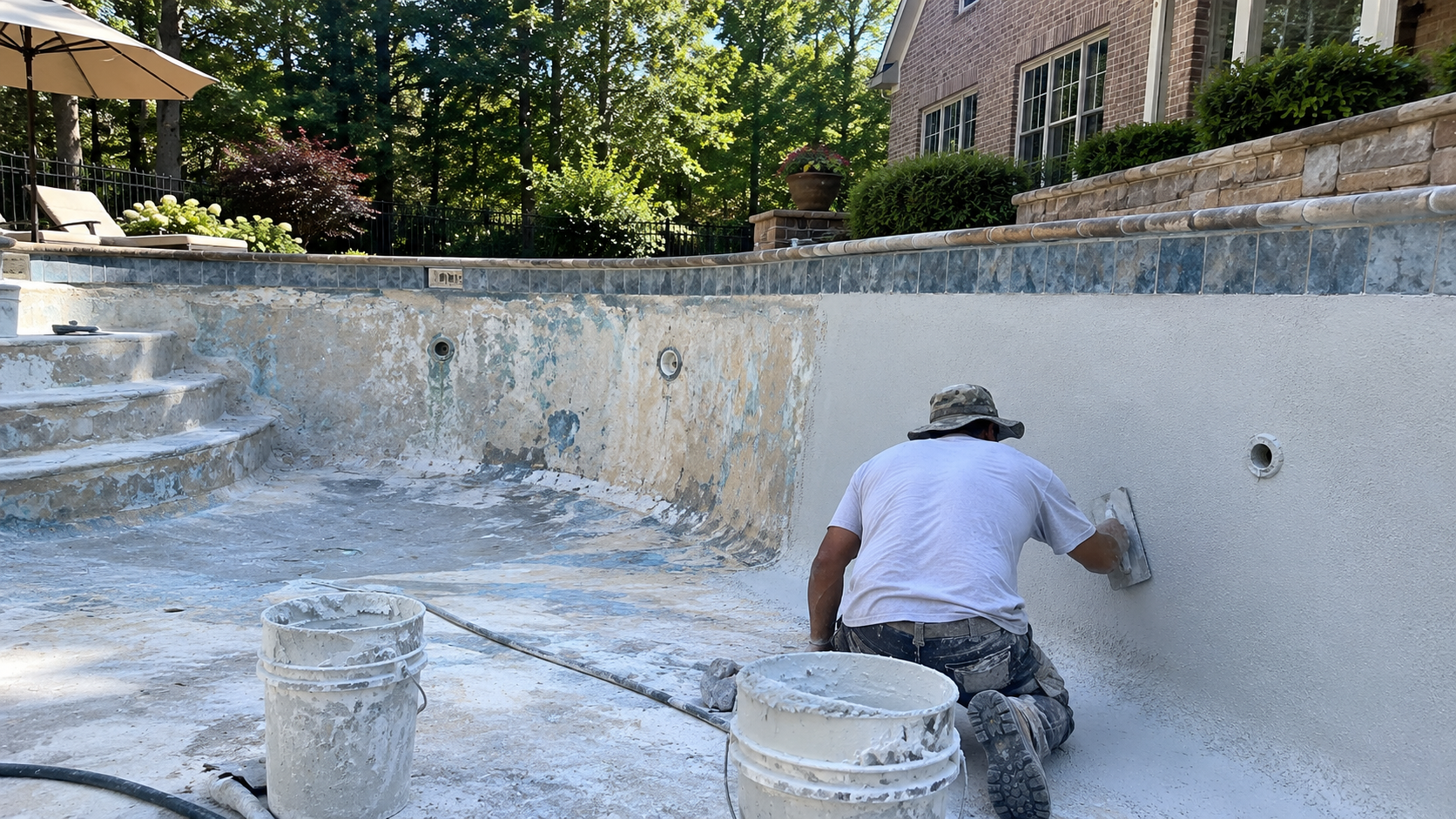
Alpharetta pools work hard. The summers here are long enough that most homeowners squeeze five or six months of regular use out of their pool every year, and that consistent exposure to sun, chemicals, and temperature swings takes a toll on the interior finish over time.
Most pool surfaces last 10 to 15 years under normal conditions. After that, the plaster that protects your pool shell starts showing its age in ways that go beyond appearance. Rough texture, staining that will not clear, and slow water loss through a porous or cracking surface are all signs that the finish has reached the end of its useful life.
All In One Pool Construction has been plastering and resurfacing pools across Georgia for over 20 years, with crews based in Suwanee serving Alpharetta and the surrounding North Atlanta suburbs. This guide covers what pool resurfacing actually involves, how to know when your Alpharetta pool needs it, what your finish options look like, and what the project timeline and costs realistically are.
Why Pool Surfaces Wear Out
Pool plaster is not a cosmetic layer. It is the finish that protects the concrete or gunite shell beneath it from water, chemicals, and the expansion and contraction that happens as pool water temperature changes through the seasons.
When that finish wears through or develops cracks, water reaches the shell material underneath. Left alone, this leads to structural damage that is far more expensive to correct than a straightforward resurface.
In Alpharetta specifically, a few factors accelerate pool surface wear:
Georgia summers and chemical demand. Alpharetta averages over 80 days above 90°F per year. Heat drives algae growth and increases chlorine consumption. Pools that need frequent chemical correction tend to see faster plaster deterioration, because aggressive chemical treatments and pH swings are hard on the surface.
Fill water mineral content. Fulton County water tends toward the softer side, which is generally gentler on plaster than hard water. However, pools that are frequently topped off without proper rebalancing can develop calcium issues over time as chemistry drifts.
Georgia's four seasons. Unlike Florida or Arizona pools that stay relatively warm year-round, Alpharetta pools go through real temperature cycles. Water expands when it heats and contracts when it cools, and that movement puts cumulative stress on the surface over years of Georgia winters and summers.
Signs Your Alpharetta Pool Needs Resurfacing
Knowing when to resurface is the question most homeowners struggle with. Here are the signs worth taking seriously.
Rough or abrasive texture. If the pool surface feels sandpaper-rough underfoot or against your hand, the calcium matrix in the plaster has been exposed by erosion. This is the most common sign in older pools, and it is not a cosmetic issue. A rough surface harbors algae more easily and makes the pool uncomfortable to use.
Staining that does not respond to treatment. Some staining clears with chemical treatment or acid washing. When brown, gray, or black staining persists after professional treatment, the stain has penetrated the surface rather than sitting on top of it. At that point, surface removal and replacement is the only durable solution.
Structural cracks in the plaster. Hairline cracks in the surface that are limited to the plaster layer are often repairable without a full resurface. Cracks that are wider, deeper, or in multiple locations typically indicate the finish has failed structurally. Water moving through cracks in the plaster can reach the shell below and begin eroding the bond between layers.
Hollow or delaminated sections. If you tap the pool wall and hear a hollow sound in patches, the plaster has separated from the shell behind it. This is called delamination, and it accelerates once it starts. Sections that delaminate eventually fall away, leaving the shell exposed.
Persistent algae that returns rapidly after treatment. A rough or porous plaster surface gives algae far more places to anchor than a smooth, intact finish. If your Alpharetta pool has been through multiple algae treatments in a season and the problem keeps returning within weeks, the surface condition may be the underlying cause rather than a chemistry issue.
Water loss beyond normal evaporation. Georgia summer evaporation can run a quarter inch per day or more. Consistent loss beyond that level, combined with an aging surface, may indicate water is migrating through a degraded finish. This is worth ruling out before assuming the loss is coming from the plumbing.
Pool Resurfacing Finish Options
When you resurface a pool, you choose a new interior finish material. The three main categories used in Alpharetta and across the Atlanta metro are standard plaster, quartz aggregate, and pebble finishes.
Standard White Plaster
White plaster is a mixture of white Portland cement and marble dust. It is the traditional pool finish and the most affordable option.
It gives pools the classic bright-white look and typically lasts 7 to 12 years. The trade-off is that standard plaster is the most porous of the three options, which makes it more susceptible to staining and algae adhesion over time. It also requires more attention to water chemistry to maintain its appearance.
For Alpharetta homeowners on a tighter renovation budget, white plaster is a functional choice. Many pools that were originally plastered white are resurfaced with a premium option at the next resurface because the homeowner decides the durability upgrade is worth it the second time around.
Quartz Aggregate Finishes
Quartz aggregate finishes blend white cement with ground quartz crystals. This creates a harder, denser surface than standard plaster that resists staining and chemical etching better and lasts longer, typically 12 to 17 years.
Quartz finishes are available in a range of colors because the pigment is mixed into the material rather than applied as a coating. The color holds significantly better over time than tinted plaster. For Alpharetta homeowners who want a colored interior without committing to a pebble finish, quartz aggregate is the most practical option.
Pebble and Stone Aggregate Finishes
Pebble finishes, including the NPT Stonescapes product line that All In One Pool Construction works with, embed small river pebbles, glass beads, or crushed stone into the cement matrix. The result is a textured, natural-looking surface that is significantly more durable than plaster or quartz.
Pebble finishes typically last 20 to 25 years with proper care. They are the most resistant to chemical damage, staining, and algae adhesion of any interior finish option. The texture also holds color in a way that standard plaster cannot match, giving Alpharetta pools a depth and richness that reads well both in and out of the water.
The cost is higher than plaster or quartz upfront. However, for Alpharetta homeowners planning to stay in their homes long-term, the extended service life often makes pebble the better financial decision when you factor in the cost of resurfacing again in 10 years versus 20 to 25.
What the Pool Resurfacing Process Looks Like
Pool resurfacing is a multi-day project that involves draining the pool, preparing the surface, applying the new finish, and completing a careful startup process. Here is what to expect from start to finish with All In One Pool Construction.
Draining. The pool is drained completely. In Georgia summers, this step needs to be timed carefully, because an empty gunite or concrete pool is subject to hydrostatic pressure from groundwater if the pool sits empty too long. All In One's crew manages this as part of the project timeline.
Surface preparation. The existing plaster is chipped or ground off the shell using diamond-tipped equipment. This step removes all of the old material down to the bare shell surface. Any structural cracks or damage to the shell itself are repaired at this stage before any new finish goes on.
Bonding. The shell surface is cleaned, etched, and prepared to accept the new finish material. Proper bonding is what determines how long the new surface adheres to the shell. This is a step where experience matters considerably.
Finish application. The new plaster, quartz, or pebble finish is applied to the shell by hand. For a standard-size Alpharetta residential pool, this typically takes one full day with an experienced crew. The material is troweled to a consistent thickness and finished to the smooth or textured profile appropriate to the material type.
Filling and startup. The pool is filled immediately after the finish is applied. Startup chemistry is critical for pebble and quartz finishes especially. The new surface needs to be brushed twice daily and maintained within tight chemistry parameters for the first 28 days to cure correctly and prevent calcium deposits from forming on the surface.
All In One Pool Construction handles the startup phase as part of the project and walks Alpharetta homeowners through what ongoing maintenance looks like during and after the cure period.
Total timeline. For a standard residential pool in Alpharetta, plan for 3 to 5 days from drain to refill, plus the 28-day startup and cure period before the pool is considered fully broken in.
Pool Resurfacing Costs in Alpharetta, GA
Resurfacing costs in the Atlanta metro area vary based on pool size, finish material, and condition of the existing surface.
As a general guide for the Alpharetta market:
- Standard white plaster: $5,000 to $9,000 for a typical residential pool
- Quartz aggregate: $8,000 to $14,000 depending on pool size and color selection
- Pebble finish (NPT Stonescapes): $12,000 to $20,000 for a standard residential pool
These ranges do not include tile or coping work, which is often done at the same time as a resurface since the pool is already drained and the waterline is accessible. Combining a tile refresh with a resurface adds cost but saves on the labor of a separate drain and setup later.
Shell repairs, if needed, are typically quoted as an add-on after the drain and prep reveal what the shell condition actually is. Most shells in decent-condition pools require minimal repair work. Pools that have had water loss issues or deferred maintenance for extended periods may need more significant structural work.
What Makes Alpharetta Pool Resurfacing Different from Other Markets
All In One Pool Construction is based in Suwanee, which puts Alpharetta squarely in our home service area. We work throughout Fulton and Forsyth County regularly, and we know the pool inventory here well.
Alpharetta has a high concentration of homes built in the 1990s and early 2000s, many with original pools that are now hitting or past the 20 to 25-year mark. These pools often have original white plaster that has been acid-washed multiple times and is ready for replacement, original waterline tile that needs refreshing, and coping that may have seen better days.
It is also a market where homeowners take their pools seriously. Alpharetta pool owners tend to maintain their equipment well and want a finish that looks right, lasts, and holds its value with the home. That is the kind of project we have been doing for twenty years, and it shows in the finished product.
FAQ: Pool Resurfacing & Replastering in Alpharetta, GA
How long does pool resurfacing last in Georgia's climate?
Standard white plaster lasts 7 to 12 years in Georgia conditions. Quartz aggregate typically lasts 12 to 17 years. Pebble finishes, including NPT Stonescapes, last 20 to 25 years with proper care. Georgia's combination of hot summers, seasonal temperature variation, and chemical demand puts more wear on surfaces than milder climates, so the lower end of each range is realistic without consistent chemistry management.
Can I just patch the worn areas instead of resurfacing the whole pool?
Patches to plaster are visible because new and old plaster cure and age differently. They also rarely hold as well as the original surface at the patched boundary. Patching is appropriate for isolated damage on an otherwise sound surface. When a pool surface has reached the end of its service life overall, patching delays the inevitable and typically costs more in the long run than resurfacing once cleanly.
Does All In One Pool Construction handle tile and coping work alongside a resurface?
Yes. Because the pool is already drained for resurfacing, combining waterline tile replacement and coping work in the same project is both practical and cost-effective. All In One handles tile, coping, and decking work in-house alongside the resurface so you are not coordinating multiple contractors or draining the pool again for a follow-up project.
How long do I have to stay out of the pool after resurfacing?
The pool is filled immediately after the finish is applied, but the startup period runs 28 days. During this time, brushing and chemistry management are critical. Most homeowners can use the pool within a week to ten days of the fill, but we advise against heavy use and no pool parties during the full 28-day cure period to protect the new surface.
Do you offer 3D design for renovation projects, or only new builds?
All In One Pool Construction offers 3D design and planning for renovation projects as well as new construction. If you are considering a resurface alongside other renovation work, the 3D planning process lets you preview tile, coping, and finish combinations before any work starts.
What is the best time of year to resurface a pool in Alpharetta?
Late fall and winter are the most practical windows for Alpharetta pool resurfacing. The pool is typically out of service anyway, and cooler temperatures during the startup and cure period are actually beneficial for plaster and pebble finishes. Spring is also workable but scheduling books up faster as homeowners try to get pools ready for summer. We recommend contacting us in January or February for a spring project to secure your spot.
Ready to Give Your Alpharetta Pool a New Interior? Let's Talk.
A pool that looks worn, feels rough, or is slowly losing water does not have to stay that way. A properly done resurface gives you another decade or two of clean, comfortable use without starting over from scratch.
All In One Pool Construction has been plastering and resurfacing pools across Georgia for over 20 years, with crews that handle every step in-house from drain to startup. Call (678) 889-2193 or contact us to request a free estimate for your Alpharetta pool.
Other Blogs
Discover our extensive range of articles on pool construction and related topics
Pool Resurfacing & Replastering in Alpharetta, GA: Signs, Options, and What to Expect

Pool Renovation in Marietta, GA: What Homeowners Should Know Before They Start
Pool Finish Comparison: Plaster vs Pebble vs Quartz
Tell us about
your project.
We'd love to hear from you! Reach out with any questions or to discuss your project needs.