.webp)

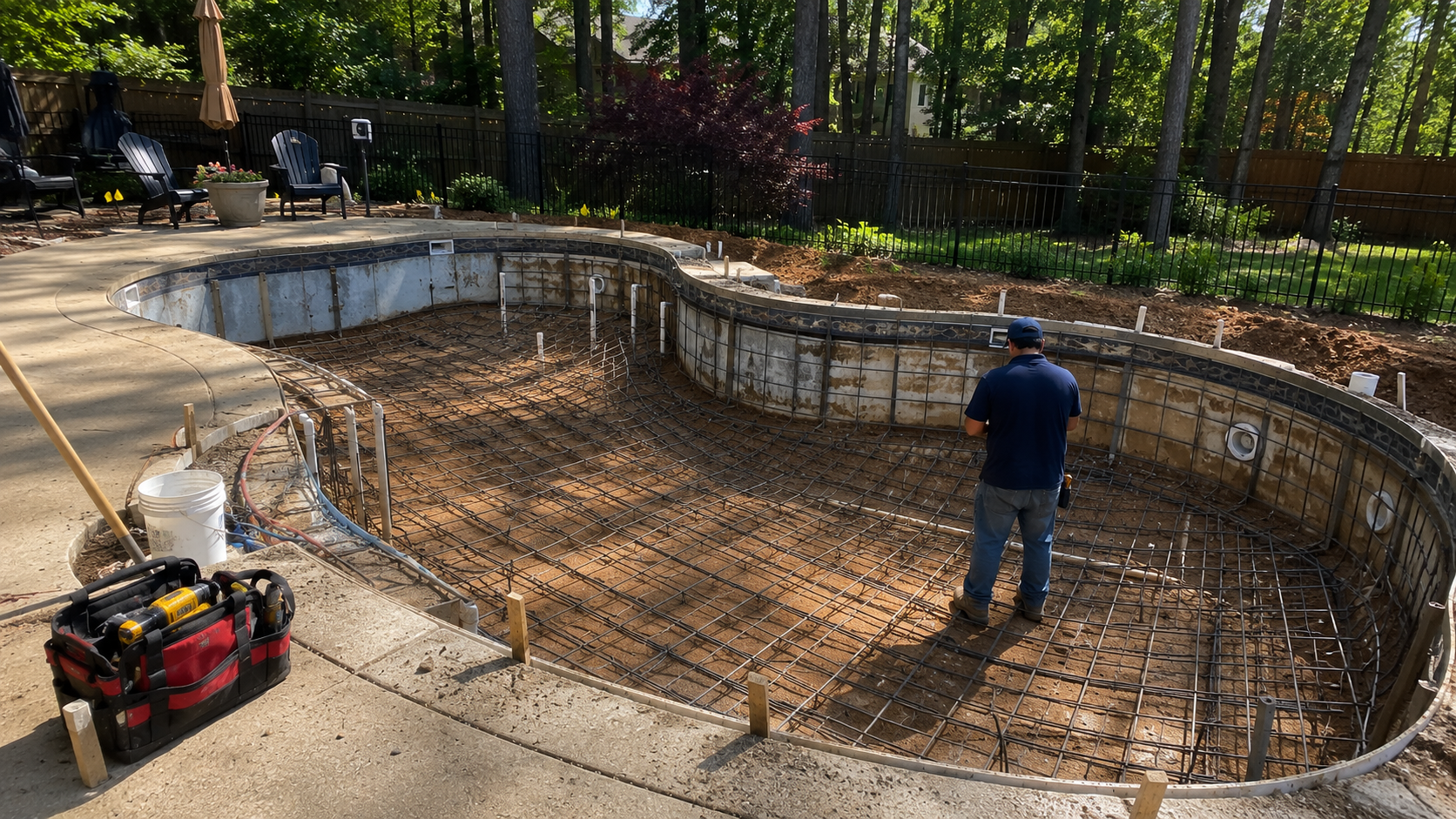
An aging vinyl liner pool does not have to mean starting over from scratch. There is a middle path. Vinyl to concrete pool conversion lets homeowners keep their existing pool's footprint. At the same time, they upgrade to a more durable, longer lasting shell. Our team at All In One Pool Construction handles these conversions across Suwanee, Atlanta, and the surrounding area. The process surprises most homeowners in a good way, once they understand how it actually works.
Why Homeowners Consider Converting
Vinyl liners typically last 8 to 12 years before needing replacement. That sounds like a long time, until you have replaced one twice. After two or three replacement cycles, many homeowners start asking a real question. Does it make more sense to convert entirely, rather than keep replacing the same liner?
A concrete shell eliminates the recurring liner replacement cost altogether. That single change is often the deciding factor. It matters especially for homeowners who plan to stay in their home long term and are tired of the repeating expense.
What the Conversion Process Actually Involves
Converting from vinyl to concrete is not a simple liner swap. It is a full rebuild of the shell itself. The process involves removing the existing vinyl structure entirely. In its place goes a gunite or shotcrete shell.
Step One: Draining and Demolition
The pool gets fully drained first. Then the vinyl liner and wall panels come out. This exposes the excavated hole underneath. Our team then evaluates it for any adjustments needed before construction begins.
Step Two: Reshaping and Excavation
Existing vinyl pools often have shapes that need modification. A concrete shell needs certain structural adjustments to work correctly. Concrete allows more design flexibility than vinyl ever could. This stage is also when many homeowners choose to adjust their pool's shape. Some add a tanning ledge. Others extend the depth in certain areas.
Step Three: Steel and Gunite Application
Once excavation is complete, steel rebar gets installed. It reinforces the new shell from the inside out. Gunite or shotcrete is then applied over the steel framework. This creates the actual structural shape of the new pool.
Step Four: Plumbing, Tile, and Finish
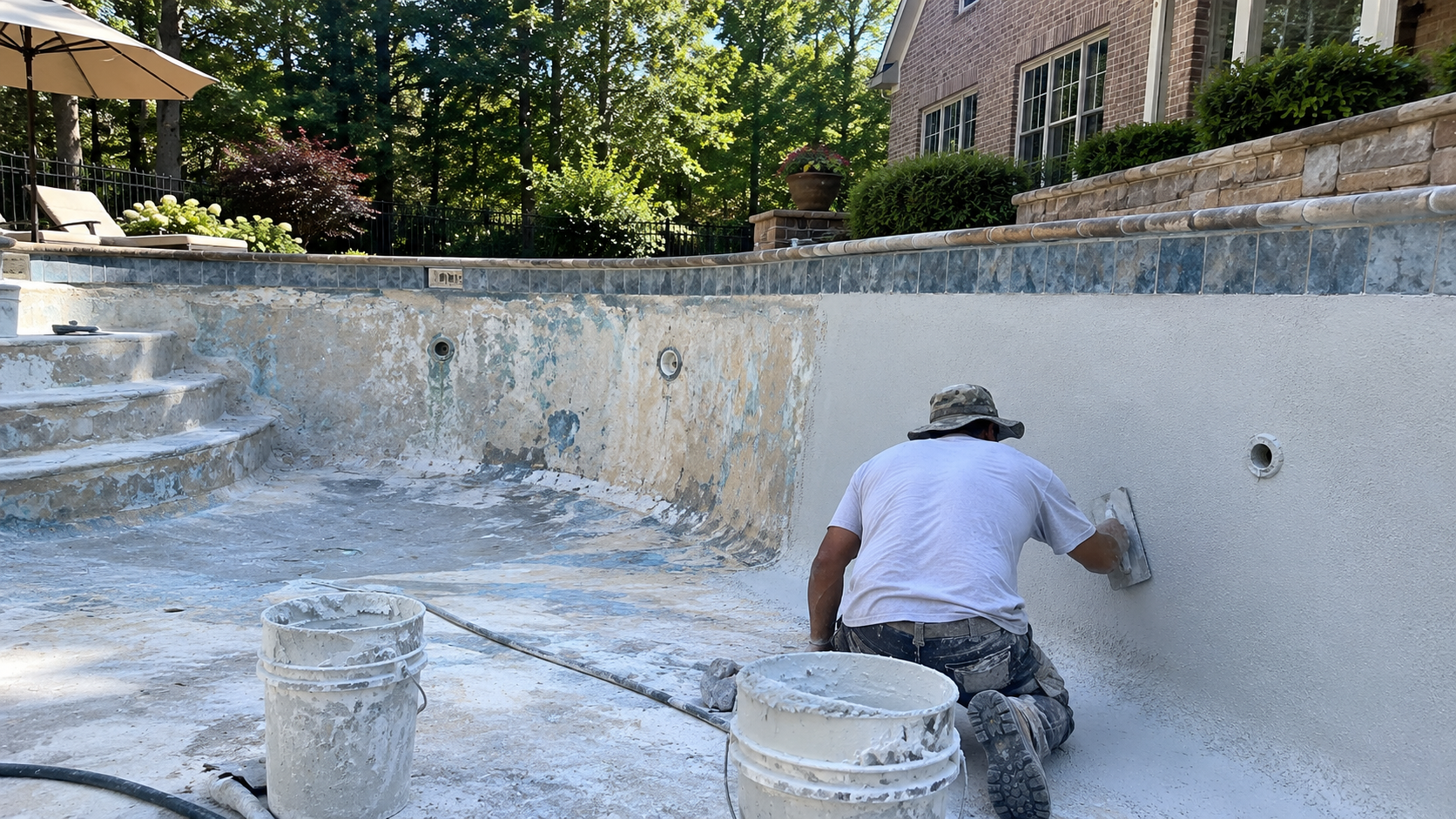
New plumbing lines get installed as part of the conversion. Vinyl pool plumbing does not always meet the requirements of a concrete build. Tile, coping, and a final plaster or pebble finish complete the project from there.
How Long Does a Conversion Take
Most vinyl to concrete conversions take 6 to 10 weeks from start to finish. The scope of design changes involved drives that range. A straightforward conversion with no shape changes moves faster. One involving significant reshaping or added features takes longer.
Weather also plays a real role here in Georgia. Heavy rain during excavation or gunite application can push the timeline out. We build some flexibility into every project schedule from the start, for exactly this reason.
What Conversion Typically Costs
Costs vary significantly. Pool size, the extent of reshaping involved, and any added features like tanning ledges or spas all factor in. A vinyl to concrete conversion generally costs less than building an entirely new pool from scratch, since the excavation and basic footprint already exist.
However, it typically costs more than a straightforward liner replacement. The scope of work involved simply runs deeper. Homeowners weighing this decision should compare the full lifetime cost. Repeated liner replacements add up against a one time conversion investment.
Design Opportunities During Conversion
This is where a lot of homeowners get genuinely excited about the whole project. The shell is being rebuilt anyway. That makes conversion the ideal time to change your pool's shape, depth, or overall design.
Adding a tanning ledge is a common request. So is extending the deep end, or incorporating a spa. Our 3D design planning process lets homeowners see these changes before construction ever begins. That helps avoid costly changes mid project.
Finish Options Beyond What Vinyl Offered
Concrete shells open up finish options vinyl liners never could offer. Pebble, quartz, and traditional plaster finishes all become available. Each brings different textures, colors, and long term durability.
Homeowners converting from vinyl often choose this moment wisely. They pick a finish that matches updated landscaping or a broader backyard renovation happening at the same time.
Common Misconceptions About Conversion
Many homeowners assume a conversion means losing their existing pool's location and size entirely. That fear stops some from even asking about it. It is not accurate, though. The existing footprint is usually preserved. Reshaping only happens if the homeowner specifically requests it.
Another misconception is that conversion takes just as long as building a brand new pool. In reality, excavation work is already partially done. Because of that, conversions typically finish faster than starting completely from scratch on a new site.
Is Conversion Right for Your Pool
A few situations make conversion especially worth considering for your backyard. If your vinyl liner has failed multiple times, or you are facing another replacement soon, the math often favors converting. It usually works out cheaper in the long run.
Homes with aging vinyl wall panels showing rust or structural wear are also strong conversion candidates. Those underlying issues do not go away with a simple liner swap. If your pool still functions well, and the liner is relatively new, conversion may not make financial sense yet.
What We Check Before Recommending Conversion
Not every vinyl pool is a good conversion candidate right away. Before recommending this path, we inspect the existing structure for issues that could affect the new concrete shell.
Wall panel condition matters here. Rusted or bowed panels sometimes need full replacement before gunite work can begin. That adds a small amount of prep time, but it protects the integrity of the finished pool. Soil conditions around the pool also get checked. Georgia's clay soil can shift in ways that affect a new shell differently than it affected the original vinyl structure.
This upfront inspection process takes an extra day or two, but it prevents surprises once construction is already underway. Skipping this step is one of the more common mistakes we see. Some contractors try to move faster than the project actually allows.
Frequently Asked Questions
How long does a vinyl liner last before conversion makes more sense than replacement?
Vinyl liners typically last 8 to 12 years. After two or three replacement cycles, many homeowners reach the same conclusion. Converting to concrete eliminates the recurring cost and makes better long term financial sense than continuing to replace the liner.
Can I change my pool's shape during a vinyl to concrete conversion?
Yes, this is one of the most common reasons homeowners choose conversion. Concrete allows far more design flexibility than vinyl. Adding a tanning ledge, adjusting depth, or reshaping the pool entirely all become possible during the process.
How much does a vinyl to concrete pool conversion cost?
Costs vary based on pool size and the extent of design changes involved. It generally costs less than building an entirely new pool, since the excavation and footprint already exist. A standard liner replacement still costs less, though.
How long does the conversion process take?
Most conversions take 6 to 10 weeks from start to finish, depending on design complexity and weather conditions. Projects involving significant reshaping or added features typically take longer than straightforward conversions.
Do I need new plumbing during a conversion?
Yes, in most cases. Vinyl pool plumbing does not always meet the requirements of a concrete build. New plumbing lines are typically installed as part of the conversion process.
Is my pool's existing size and location preserved during conversion?
Usually, yes. The existing footprint is generally preserved unless you specifically request reshaping or size changes as part of the project. Conversion does not automatically mean starting over from a completely different layout.
Based in Suwanee, we serve pool owners in Atlanta, Alpharetta, Marietta, Roswell, Sandy Springs, Johns Creek, Athens, and across the state. Need a fresh finish on a tired concrete pool? We handle that. Want a full pool renovation with new tile, coping, and lighting? We handle that too. Whatever your pool needs, we treat it like our own.
Other Blogs
Discover our extensive range of articles on pool construction and related topics
Waterline Tile and Coping Replacement in Metro Atlanta

Pool Deck Resurfacing and Leveling: What Atlanta-Area Homeowners Need to Know
Pool Resurfacing & Replastering in Alpharetta, GA: Signs, Options, and What to Expect
Tell us about
your project.
We'd love to hear from you! Reach out with any questions or to discuss your project needs.