
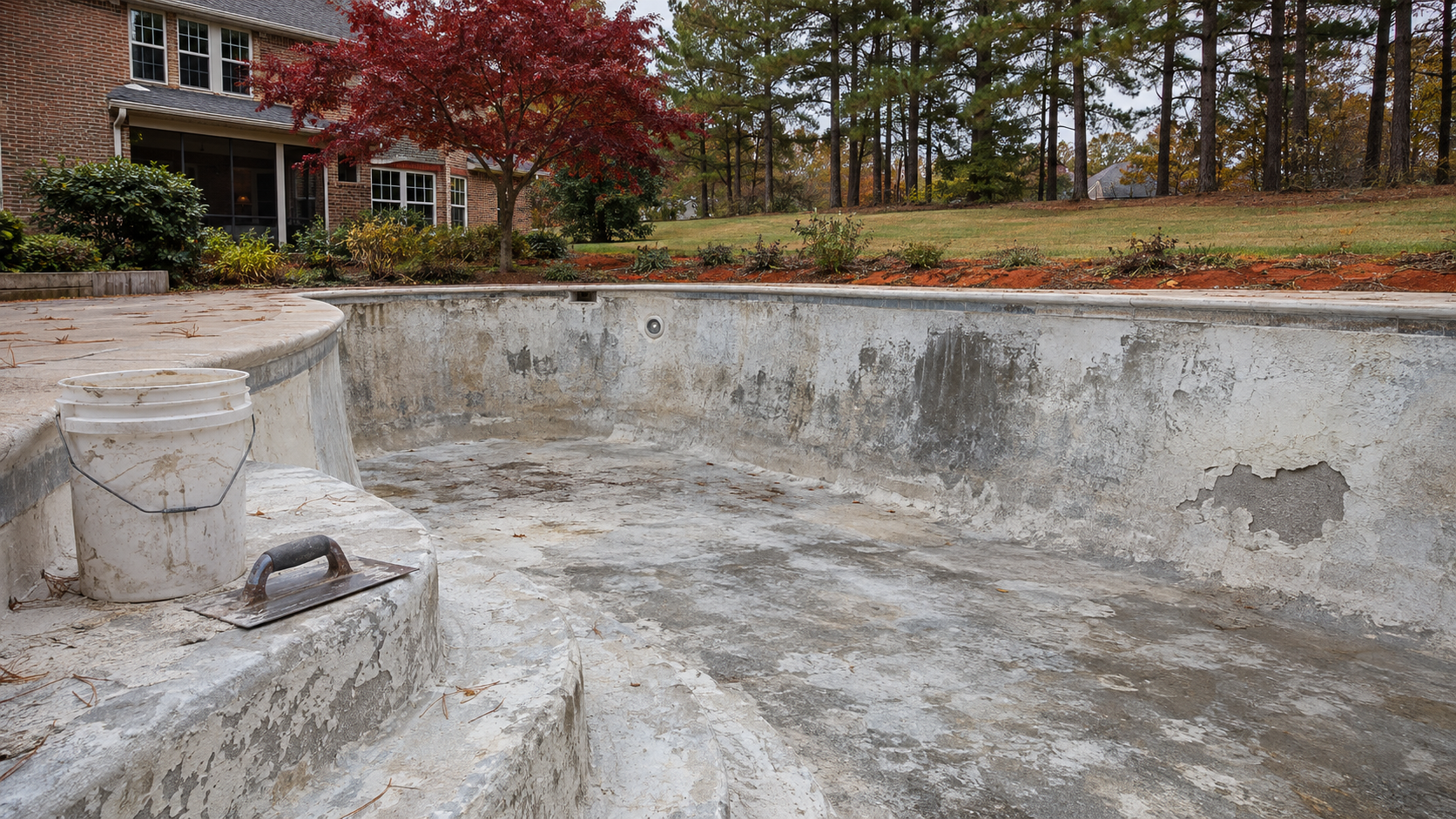
Run your hand along the pool wall. If it feels like sandpaper, or your swimsuit keeps snagging, your plaster is telling you something. Pool replastering in Atlanta is one of the most common renovation jobs we handle, yet most owners are not sure when it is actually needed.
At All In One Pool Construction, we have spent 20 years building and renovating concrete pools from our base in Suwanee across metro Atlanta and Georgia. We see plaster at every stage, from brand new to completely worn through.
Below, we cover how long plaster typically lasts here, the signs it is wearing out, and what a full replaster involves.
How Long Pool Plaster Lasts in Atlanta
There is no single expiration date for plaster. How long it holds up depends on the finish, the quality of the original application, and how well the water has been kept. That is why we judge each pool by its condition, not by its age alone.
Water Chemistry Makes the Biggest Difference
Water that runs low on calcium tends to pull calcium out of whatever it touches, including your pool surface. On the other hand, water that stays too high in calcium can leave rough scale behind. Keeping calcium hardness and pH balanced is one of the best ways to protect plaster.
Weather Plays a Role Too
Georgia summers push water temperatures high, which speeds up chemical reactions in the pool. Winter brings occasional hard freezes and long stretches with the pool closed or lightly used. That swing from heavy summer use to winter neglect is often when small problems turn into visible damage.
Two Pools, Two Timelines
Two pools plastered the same year can look completely different a decade later. In our experience, the one with consistent weekly care almost always holds up better. Age is a clue, but the surface itself tells the real story.
Signs It's Time to Replaster Your Pool
Plaster usually wears out gradually, so the warning signs are easy to overlook. Here is what we look for during an inspection.
Rough Texture and Etching
Worn plaster feels gritty and can scrape feet, knees, and swimsuits. In many cases, you will also notice a chalky film or pitted spots on the steps and floor. That roughness also gives algae more places to cling.
Stains That Will Not Come Out
Some stains lift with the right treatment. Others sink deep into old, porous plaster and stay no matter what you try. Permanent staining is a strong sign the surface has reached its limit.
Hollow Spots and Delamination
Tap a suspicious area with a coin or a screwdriver handle. A hollow sound means the plaster has separated from the shell underneath. Eventually, those spots break loose and leave a rough patch behind.
Exposed Gunite
Dark gray patches showing through the finish mean the plaster has worn down to the shell. At that point, the concrete beneath is unprotected. Waiting longer only makes the next job harder.
Cracks and Water Loss
Surface crazing, those fine spiderweb lines, is mostly cosmetic. Deeper cracks are a different story, especially if the water level keeps dropping. Those need a closer look before any new finish goes on.
Patch, Acid Wash, or Full Replaster?
Not every worn pool needs a complete replaster right away. The right call depends on how widespread the damage is and how much life the surface has left.
- Spot patching works for a few small chips or delaminated areas. However, patches rarely match the surrounding color perfectly, and they do not stop overall wear.
- An acid wash strips a thin layer off the surface to remove stains and brighten the finish. Because it removes material, it shortens the remaining lifespan, so we use it sparingly.
- A full replaster is the right move when roughness, staining, or hollow spots cover large areas. It resets the clock and gives you a smooth, watertight surface again.
One misconception we hear often: an acid wash will make old plaster like new. In reality, it can make thin, tired plaster wear out even faster. If your finish is already rough and patchy, the money usually goes further toward a replaster.
Pair It With Other Upgrades
Because the pool is drained anyway, replastering is a smart time to handle other work. Many owners update their waterline tile and coping at the same time. Our post on waterline tile and coping replacement explains how that sequence works.
What the Replastering Process Looks Like
A replaster is more than a fresh coat on top of the old one. Here is the general sequence on a typical residential job:
- Drain the pool carefully. After heavy rain, groundwater can push up on an empty shell, so timing and hydrostatic relief matter.
- Remove or prep the old surface. Loose and hollow plaster is chipped out, and the remaining surface is prepared so the new finish bonds properly.
- Address tile, fittings, and cracks. Any structural cracks or worn fittings get repaired before the new finish goes on.
- Apply the new finish. The crew troweling the surface works quickly and steadily, since plaster sets on its own timeline.
- Refill without stopping. Filling begins right after application and continues until the pool is full, which helps prevent streaks and rings.
- Start up the water chemistry. The first few weeks call for daily brushing and careful balancing while the surface cures.
Choosing a Finish
Finishes vary in color, texture, durability, and price. During your consultation, we walk through the options we offer and help you match one to how you use your pool. How long you plan to stay in your home matters too.
When to Schedule in Atlanta
Spring and fall are usually the easiest seasons for plastering here. Mild temperatures help the finish cure evenly, while peak summer heat and winter cold make application trickier. Booking early in the off season also gives you a better shot at a ready pool by summer.
Frequently Asked Questions
How often does a pool need to be replastered?
There is no set schedule for replastering. How long plaster holds up depends on the finish, water chemistry, usage, and the quality of the original job. An inspection is the best way to judge how much life your surface has left.
How long does pool replastering take?
Timing depends on pool size, any repairs needed, and the weather. During your consultation, we give you a project timeline based on your specific pool. Startup care continues for several weeks after the pool is full.
Can I swim right after my pool is replastered?
You can usually swim once the pool is full and the water chemistry is balanced. During the first few weeks, daily brushing helps the new surface cure properly. Your contractor should give you a clear startup schedule to follow.
How do I choose the right finish for my pool?
Start with how you use the pool and how long you plan to keep it. Finishes differ in color, texture, durability, and cost. We walk through the options during your consultation so you can compare them side by side.
What is the best time of year to replaster a pool in Atlanta?
Spring and fall are usually ideal because mild temperatures help the finish cure evenly. Extreme summer heat and winter freezes make application more difficult. Scheduling in late winter or early spring often means a fresh pool by summer.
Do you offer pool replastering outside Atlanta?
Yes. All In One Pool Construction is based in Suwanee and works across metro Atlanta, including Alpharetta, Johns Creek, and Marietta. We also serve other Georgia cities such as Augusta, Savannah, and Columbus.
A rough, stained, or hollow sounding pool surface does not get better with time. If you are seeing the signs, All In One Pool Construction can inspect your plaster and tell you honestly whether it needs a patch or a full replaster. Book a consultation today, and we will help you plan a new finish that looks great and lasts for years.
Other Blogs
Discover our extensive range of articles on pool construction and related topics
Pool Replastering in Atlanta: How Long Plaster Lasts and When It's Time to Redo It

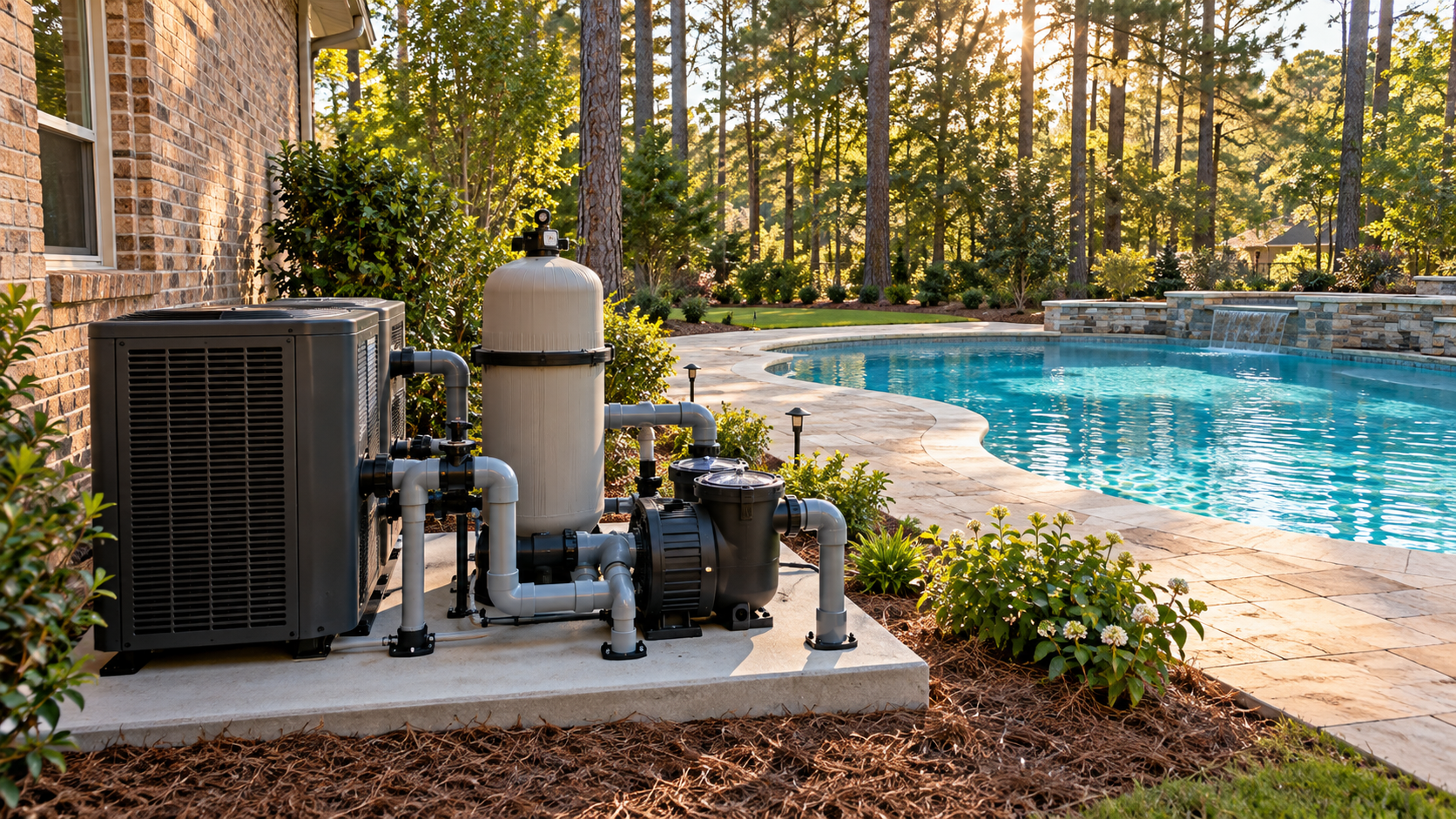
Pool Equipment Replacement in Atlanta: Pumps, Filters, and Heaters During a Renovation
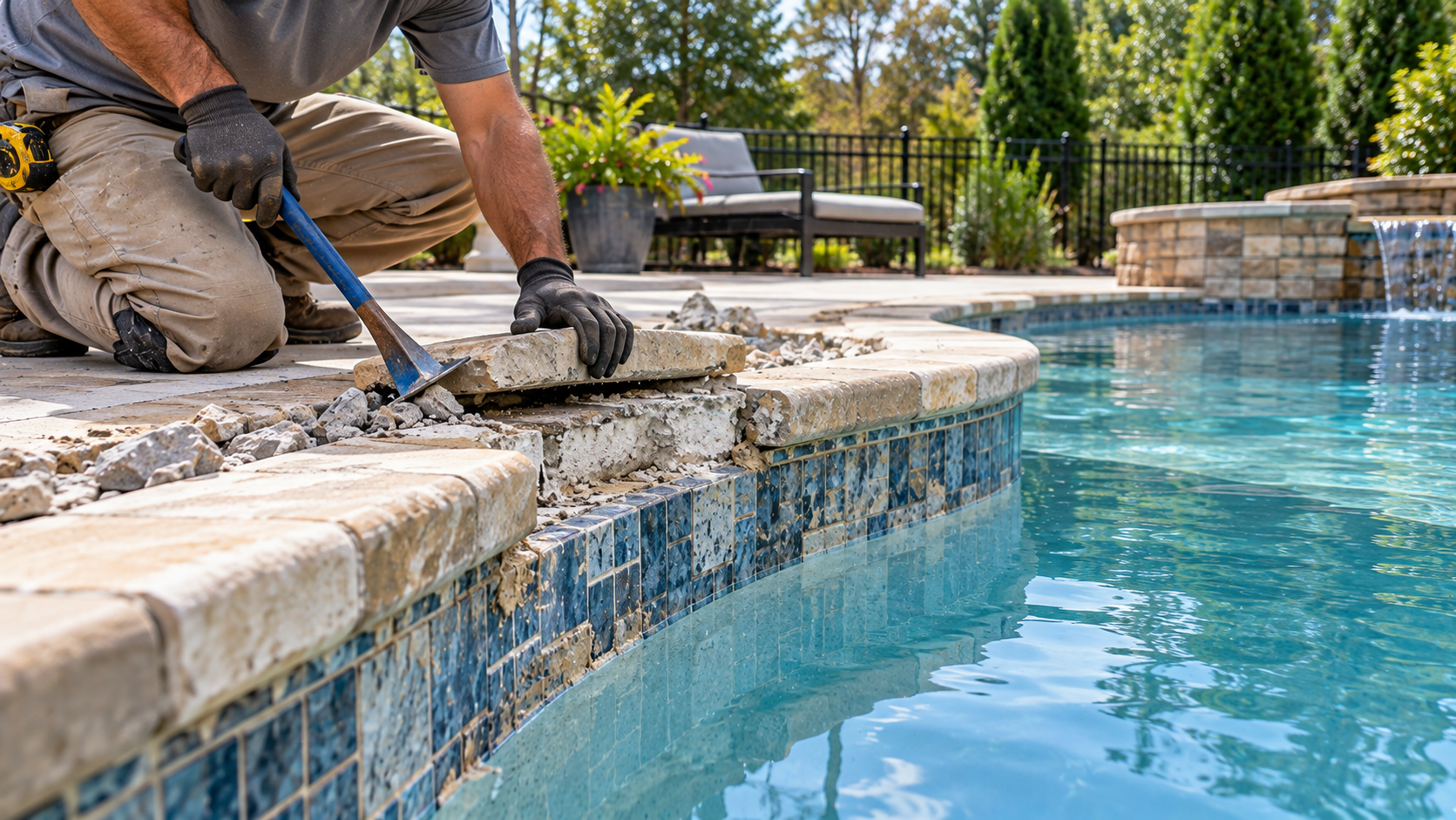
Waterline Tile and Coping Replacement in Metro Atlanta
Tell us about
your project.
We'd love to hear from you! Reach out with any questions or to discuss your project needs.